
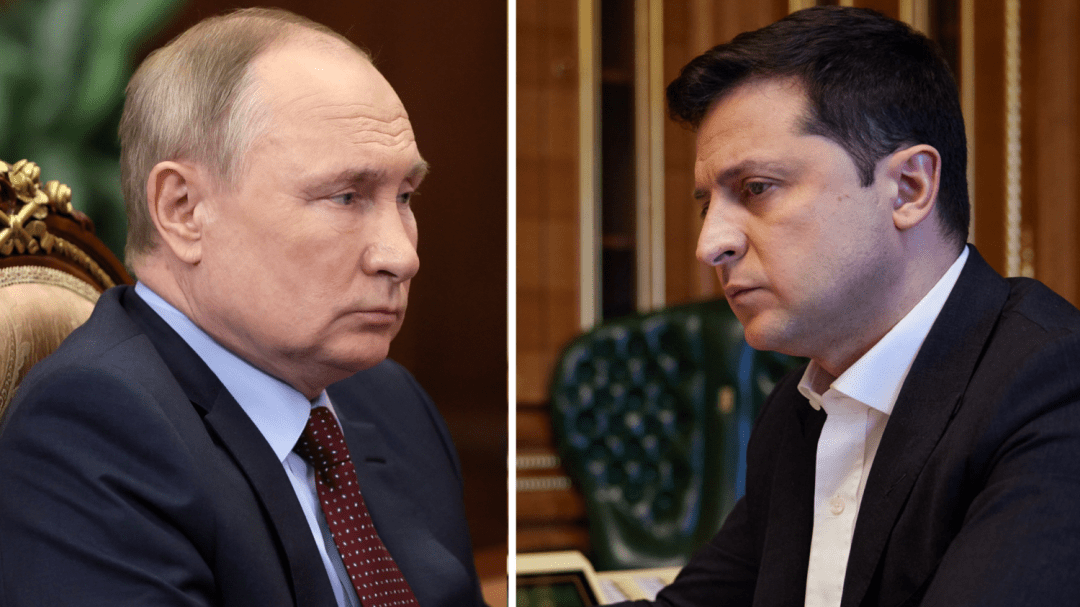
It must be said that Russia and Ukraine are both oligarchic dictatorships, and no one from Western democracies should be aligned with any one of them, in a geopolitical sense. This view is considered out there considering as a Canadian, I must “support Ukraine,” “stand against Putin,” and “support Zelensky.” I see this and I think to myself: ok I am not a fan of Putin, but I am not going to start to support the fascist dictatorship of Zelensky and the Ukraine. Did I just hit a nerve? Do some of you honestly think that Ukraine is a democracy? Do you think Ukraine is above reproach and not like Russia? Let’s review.
Since the large portion of individuals who read this blog come from Western democracies, it is important to frame the beginning of this through the lens of Western democracy. First, to many people born between 1946-1980, Russia is still the Union of Soviet Socialist Republics (USSR) – or just the Soviet Union. According to the United States, 4 in 10 Americans who are Baby Boomers and Generation X still see Russia as the Soviet Union. Now that is a blanket statement, I understand that not all Boomers or Gen X still see Russia as the Soviet Union. Psychologically, this can be attributed to an event where an individual lives through an existential trauma, and re-affirms the characteristics of that trauma even though the event has ended. Most Baby Boomers and GenX lived through the Cold War from 1946 to 1989 under the ‘supposed threat’ of nuclear annihilation from the Soviet Union. I mean, this was serious enough that two proxy wars (Korean War, Vietnam War) were fought because of it.
This psychological phenomenon can be replicated through millennials as well, and their inheritance of anxiety and collective trauma years after the events of September 11th. Very few studies have been produced relating to this phenomenon; however, one can hypothesize that this Cold War mindset of collective trauma is actualized with Baby Boomers and GenX which fits into the Russia/Ukraine narrative. For example, Pew Research concluded that out of the 532 voting members of the 116th US Congress, 336 are Baby Boomers and Silent Generation (63%); note, the Silent Generation is even older – born between the years of 1928-1945. The reason this is important is that the political narrative of the Russia/Ukraine war is important to understanding the funding that goes toward the war – the topic that most people have a problem with. If you appreciate the mindset that both countries are oligarchic dictatorships, you go apoplectic when any money goes toward the war.
Unpacking the concept of “Soviet Tradecraft”
Ever since the election of Donald Trump in 2016, Democrats have levied the claim that Trump won due to election interference from Putin, through some form of Russian/Soviet Tradecraft – like a spy novel coming to life! Considering the 2016 election came 27 years after the fall of the Soviet Union, or even how Soviet/Russian Tradecraft was used to bring up the Hunter Biden Laptop truth. I will indulge this concept of Soviet Tradecraft, and what it means.
Again, they use Soviet and Russian interchangeably because of their Cold War mindset, that Russia is still the enemy: “We must support Rocky Balboa against Ivan Drago!” Ultimately, tradecraft refers to the techniques, methods, and technologies used in modern espionage (spying) and generally as part of the activity of intelligence assessment. I mean, one can argue this does happen involving Russia, notably when the Hillary Clinton campaign spied on the Trump campaign, but depending on where you hear it from, it is just mere propaganda. The view of Russian tradecraft (the one the mainstream media has) ended in the 1980s and is insignificant. If anything, tradecraft has switched hands in the form of NATO/United States tradecraft on a domestic and global scale. Here are some examples:
- PATRIOT Act
- NSA spying program.
- Five Eyes Intelligence.
- The existence of the CIA.
Ukraine and Russia 1989-2014
Much of the narrative related to Ukraine and Russia has a starting point of January/February 2022. Of course, the history of these two goes back a lot further. Where can be our starting point? Do we want the year 1552 when Ivan IV led Russian troops to Kolomna to fight the Tatars in the Russo-Kazan Wars? Or what about the Crimean Tatar invasion of Russia back in 1507 after the death of Prince Ivan III? For the sake of simplicity, I think a good place to start is in 1989 after the fall of the Soviet Union. We entered a stage of Soviet dissolution and balkanization of nation-states and ideologies with former Soviet bloc countries becoming their own. Relating to Ukraine, one of the most significant moments was the Belovezha Accords in late 1991, which saw the official end of the Soviet Union and the formation of the CIS (Commonwealth of Independent States) – this led to Ukrainian independence becoming official on December 26, 1991.
However, the relationship in the late 20th century was not as peaceful as one might think, as territorial disputes of Crimea, Sevastopol, and the Donbas have always been debated. Ukraine would contend that the 1954 Transfer of Crimea from Russian Soviets to Ukrainian Soviets is codified. However, the Russian legislature considered this illegitimate in 1992 considering this was an agreement between Soviet states; thus, void since the dissolution of the Soviet Union. Although, many fierce – and at times threatening – debates happened they eventually came to an agreement in 1997 called the Partition Treaty: a bilateral agreement between Russia and Ukraine that divided up Crimea to essentially ‘share’ military power. One might say, aside from fiery rhetoric, Russia and Ukraine were non-combative in the 1990s.
It was at this time NATO was expanding to other areas of Europe, even after it completed its number one objective since 1949 to stop the Soviet spread. In 1990, NATO completed the reunification of Germany. German Reunification is a lynchpin in this whole Ukraine-Russia conflict, as it is disputed that an unsaid agreement that NATO would not expand beyond the borders of Germany. However, the narrative of an “unsaid agreement” seems to forget about the February 1990 conversation between U.S. Secretary of State James Baker and Soviet leader Mikhail Gorbachev – which Baker ensured Gorbachev that if NATO and the United States maintained a presence in the country of Germany, “there would be no extension” of NATO “one inch to the East.” Call this a gentleman’s agreement, sure, but to say it was “unsaid” is a lie.
In Trachtenberg’s article, many scholars, and world leaders from many sides of the political matrix have sympathized with Gorbachev in that this gentleman’s agreement meant that NATO would not move East of Germany. However, in a 2009 CNN Interview, Baker explained that the discussion of moving Eastward only related to Germany, not bringing in new members of NATO, and no official agreement was made between Russia and the United States to not expand NATO. Essentially Baker is playing the “a gentleman’s agreement is not a legally binding document.” Of course, as history shows, NATO expanded almost immediately after this 1990 agreement with the Czech Republic, Hungary, and Poland in 1999; and Bulgaria, Estonia, Latvia, Lithuania, Romania, Slovakia, and Slovenia in 2004. There seems to be some revisionist history going on, the best example is from John Kirby.
However, on the side of NATO, one could say they used “good salesperson techniques,” as in, used propaganda to scare the crap out of former bloc countries with the threat of nuclear war by Russia, and the offer of protection against them. Essentially, a more refined, geopolitical version of the Mafioso Window Scam.
Mafioso: Hoods are out here breaking windows, you can pay us for the protection of your business.
Business Owner: no thanks.
(Business owner sees stores around them, with their windows being busted by members of the Mob with their faces covered.)
Business Owner: ok, I will pay protection.
This is the case with Finland, which joined NATO in 2023 when NATO Secretary General Jens Stoltenberg stated he would welcome Finland as a NATO nation outlining a military commitment to maintaining a democratic society. Interesting rhetoric as “maintaining” a democratic society is seen as fragile in Finland, even though the country has ratified many democratic laws, including a national constitution in 2000. One cannot know what goes on behind closed doors at NATO/Country meetings, but one can say that Russia-Ukraine tensions are good for business not only for NATO but potential member countries.
According to John Mearsheimer, Russia-Ukraine tensions were relatively quiet until 2008 when the United States supported a plan for Ukraine to join NATO; in addition, reports that Ukraine provided weapons to Georgia, and disputes over natural gas prices. Things heated up with the election of Viktor Yanukovych in 2010 – as he was considered a pro-Russian, neo-Soviet president. This all came to a head in 2013 with the Euromaidan Revolution which was a series of large protests, demonstrations and civil unrest over Yanukovych’s decision not to join the European Union – much to the disagreement of the United States and NATO. After threats on Yanukovych’s life, he signed an agreement to hold an interim unity government, fled the city, and was eventually removed by parliament.
There are stories surrounding this point in history, one side called it a Euromaidan revolution for the free people of Ukraine to stand up to their tyrannical government; another side calls it a Euromaidan coup which asserts it was an attempt by unsavory characters (including NATO and the United States) to oust Yanukovych from his seat for a pro-EU, pro-NATO leader. Regardless, this led to Russia pursuing the Annexation of Crimea after a referendum vote in the area in 2014, and the official start of the Russia-Ukraine war.
Ukraine’s Fascism
This would be considered a very serious claim, but unfortunately, this does have truth behind it. Since most of the discussion in mainstream news is about Russia being the bastion of evil and the supposed “bad guys” in this story, it is important to outline some significant truths about Ukraine, notably the influence of fascism in all levels of government and national identity.
Full disclosure, Russia has its own collection of fascistic members called the Wagner Group who were pilloried by the media, only to be given a heightened level of interest when considering a violent coup against Putin. The elite idiocrasy of the MSM and our security apparatus will provide tempered praise to neo-Nazi Russians, so long as their against the supreme evil of Vladimir Putin. Furthermore, as Michael Tracy points out, the United States was siding with Wagner in their intelligence recruitment to ‘handle’ Putin.
It is already known that since 2014, Ukrainian Neo-Nazis have had a significant impact on the war with Russia. From their influence on the Euromaidan protests to paramilitary organizations accepting funding from the United States and Canada, the effect of Neo-Nazis on how Ukraine operates cannot be understated one can argue that Ukraine’s fascism is more prevalent than that of Russia. In general, the Wagner Group is largely a joke, whereas groups like the Azov Battalion – the most infamous of Neo-Nazi groups, with their patented Wolfsangel logo – are rolled in with the National Guard of Ukraine. For context, that would be like the FBI in the United States accepting Neo-Nazis in their ranks.
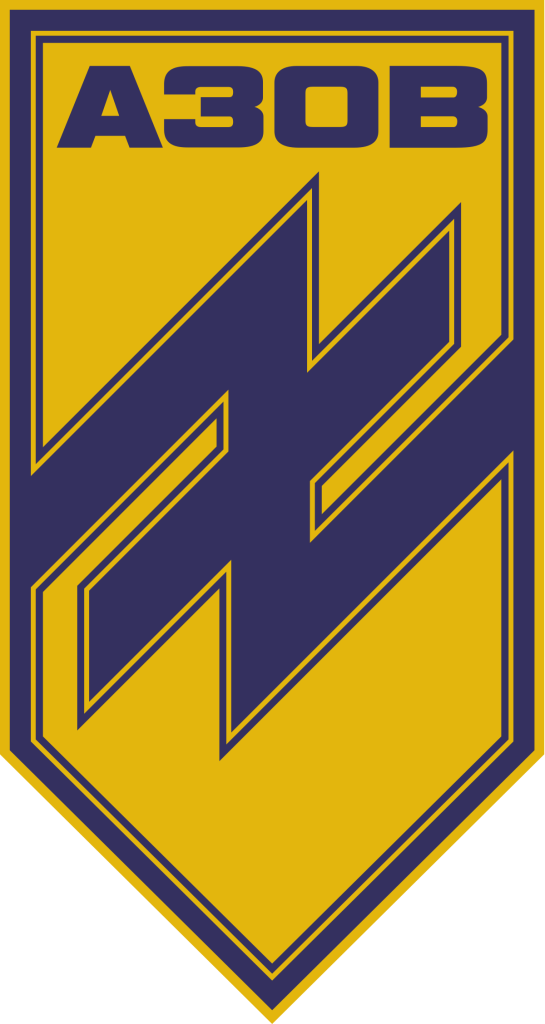
This did not just percolate in 2014, Neo-Nazism has been prevalent in Ukraine for quite a long time, as Max Blumenthal explains, not Neo-Nazism, but Nazism was prevalent in many areas of the Ukraine government since the 1940s. This starts with Stepan Bandera and his status as a hero to the people of Ukraine. Who was Stepan Bandera? Well, he was involved with nationalist organizations at a young age and his prominence came in 1941 when he established the proclamation of the Ukrainian state while collaborating with Nazi Germany, and was a part of massacres involving Polish and Jewish citizens. As Blumenthal explains, during the 1940s Bandera formed the Organization of Ukrainian Nationalists (OUN). When the OUN split, Bandera created an even more radical wing called the OUN-B (B standing for Bandera). In his book: Frontline Ukraine: Crisis in the Borderlands, Richard Sakwa states:
“Bandera espoused a virulent form of integral nationalism, an exclusive and ethnically centered definition of the Ukrainian nation, accompanied by the murderous denigration of those who allegedly undermined his vision, notably Poles, Jews and Russians.”
It is within these ultranationalist origins of Ukraine, you get the tradition of new sects of ultranationalism such as the Azov Battalion, the Svoboda Party, or the Right Sector – all have prominent power within the politics of Ukraine. It should be stated that Zelensky is Jewish, which is used as propaganda to say there are no Nazis in Ukraine; however, in 2021, Zelensky appointed Serhiy Sternenko as head of Ukraine’s Security Service (SBU) in Odesa. Sternenko was the former head of the Right Sector in Odessa and was implicated in the 2014 Trade Unions House Massacre that brutally killed 46 people, many of them separatists. Sternenko was also very involved in Euromaidan. If anything, Zelensky — much like the actor he was before government — is playing the role of a Kapo or a Judenräte quite well with his nazi pals.
I think what is interesting is that our elites have used the word Nazi to demean and belittle people who do not agree with them, not even realizing they collaborate and support Nazis in Ukraine. What is even more sinister, is that interests in the United States are not ignorant of the high level of fascism in Ukraine; in many instances, they support it. The Atlantic Council on Foreign Relations – A U.S. Government think tank in Washington D.C. – wrote about Sternenko and described him as an “activist” in efforts to prevent a “Kremlin-led” takeover of Russia’s “ongoing hybrid war against Ukraine.”
This War is Hurting the Globe
This war is ultimately hurting the globe, but not in the way it is being described by our government leaders. Our threat is not solely Russia, it is the greedy continuance of the war that is hurting the global economy. This is pushed on by Russia, Ukraine, China (yes they are involved too), and NATO countries – predominantly the United States.
For one, this war is causing many economic issues involving trade, and most importantly, the higher prices at the pump. Now, the rise in gas prices is a multi-faceted issue including inflation, failed climate policies such as the carbon tax in Canada, and OPEC restrictions on the market supply of crude. But this war has big implications, considering our governments won’t commit to energy independence, meaning we need to import from OPEC countries (Russia is an OPEC+ Member) leaving our way of life vulnerable. Not to mention the massive casualties a war brings to the citizens of the belligerents.
So long as this war is making money for individuals associated with it…
- NATO and the United States provide funding for military contractors.
- Ukraine receiving the money and weapons to fuel its corruption.
- Russia is being pushed into the arms of China and enhancing its economy.
…we will not see an end to the war anytime soon. If there is an end to the war, I see only one way out of this. Now, this is a crude representation of a treaty, and needs much more insight, but here are some potential ideas.
- Ukraine gives up the regions that have voted in a referendum to be a part of Russia (Donbas and Crimea).
- Russia pays for damages to areas outside of the Donbas and Crimea and signs a pledge not to move on Ukraine or any other European Nation.
- Ukraine never becomes a member of NATO.
- Re-open Russia and Ukraine for effective trade – especially for natural gas limiting the reliance on OPEC.
- NATO pledge (in writing) to limit any more expansion.

 carsonbabich.com