

I have given myself quite a valley of time between Part II and Part III. This section talks about culture connected to the university and the reason for this valley is two-fold: I needed the craziness of the pandemic to really subside – to get a sense of the culture as a thread continuing from a 2019-like time; also, questions surrounding the uncertain decisions of our leaders during the pandemic – and in society as a whole – I feel that this information needed to be shared with more introspection. When talking about a socio-political landscape, things can change quite quickly, and I think most readers will agree, we have changed in many ways since September of 2022.
Perhaps, we haven’t changed that much given a host of concepts in this series have been a fixture in universities for quite some time now, and the insanity of the pandemic narrative has only made it worse than better in my opinion. But alas, the concepts of student debt policy and the commodification of the student have led us to this question: how is the socio-political landscape impacting universities? By stifling ideas and enhancing ideology.
As always, I like to give definitions as I feel this is a challenge in our educational discourse – the ability to define words effectively. Let’s investigate, what is the difference between ideas and ideology. Ideas are an aim or purpose, thought or suggestion, that is used in the pursuit of finding information. Ideology is a set of ideas, and beliefs, commonly held by an individual or a group of people – especially those held for reasons that are not purely epistemic, in which practical elements are as prominent as theoretical ones. On the surface, you can suggest that ideas are collected and built to create ideology – which is true – but it is much deeper than that, especially the second half of the definition. We see the phrase “not purely epistemic” as an interesting concept. If ideas are thoughts or suggestions to find information, and ideology encompasses ideas that are not purely epistemic (meaning: knowledge to the degree of its validation), it would seem that ideas are at odds with ideology. Unless, with ideology, there is a concept of ideas that are accepted by a group that is not actually true – in this case, ideology could be akin to dogma.
We see the word dogma used in many instances and it means a set of ideas or principles laid down by an authority as uncontrovertibly true. I will not belabor the point by providing examples of this with covid, you can look at mine, or many others’ previous work with this – but it offers insight. If someone can create an ideology – indeterminate of truth – authoritatively forced as truth through a sense of incontrovertibility, the phrase ideology is much more closer to dogma than we think.
Prevailing Ideology in Universities
This leads us to universities and the prevailing ideology inside them, or should I say, the prevailing dogma. I mentioned Benjamin Boyce and his work on Evergreen, and I can say that compared to my experience, I would say Evergreen was an extreme case of ideology permeating an institution. With that established, I would be remiss to say that some of those characteristics are prevalent – if not explicitly shown. What do we call this ideology? Many names have been given to it: woke, neo-Marxism, intersectionalism, cultural Marxism, critical consciousness, etc. We know what this ideology is, but we still cannot hammer down a clear definition.
I love the show Breaking Bad; the characters are so well written – a small but pivotal role in the series was Gretchen Schwartz (played by Jessica Hecht) who was the former love interest of Walter White. I don’t want to go into a full synopsis of the show, but her bio on the Breaking Bad Fandom Page has some interesting information.
“Gretchen was born into a wealthy family and at one point began working for Walter White as his lab assistant at his and his best friend Elliot Schwartz’s company Gray Matter Technologies. She and Walt eventually sparked a romance, fell deeply in love and were at one point engaged. However, after introducing Walt to her family at their home on a Fourth of July weekend, he abruptly left her without any explanation due to feelings of inferiority that her family’s wealth and status stirred up in him.”
During the series, she is friendly to Walt by offering things like paying for his cancer treatment with their billions made off of Gray Matter Technologies. In season 5 when Walt discovers both of them on Charlie Rose donating $28 million for drug rehab, and is solely connected to him and the drug empire he cultivated, he observes this as a slight. She asserts that she once knew and loved the man Walter White, but did not recognize this new monster anymore; in contrast, I think Walt sees Gretchen for what she is as well. This brings up some questions, considering Walt has confirmed many times – in a case of irony – that he did not in a sense ‘break bad’ he was always this way and that he liked it. This made me think of Gretchen and cannot help but wonder if she claimed to know Walt all along, she knew the kind of man he always was.
Gretchen knew Walter White was a Heisenberg type all along, but still formed a relationship with him, displays her wealthy family, shows pity toward Walt in offering to pay for his treatment, holds secrets for him, divulges those same secrets to Walt’s wife, and calls the man she once knew a monster. Some may vehemently disagree, but the characteristic traits of Gretchen would be manipulative, opportunistic, and faux niceness hiding her dark characteristics. She is the most Jungian Shadow character in television history, she attempts to keep Walt around and displays compassion as a mask to cover her darkness of opportunism. Perhaps, the writers even saw some of this, as thematically, the final scenes for Skylar, Jesse (in El Camino), Hank, and Mike are all in scenes of daylight; whereas Gretchen and Elliot’s final scenes are in a dark futuristic mansion that looks so sanitized, it is like saying you can clean yourself all you want, we still see you in the dark.
Gretchen Ideology: Secretly manipulative, opportunistic, and faux niceness hiding shadow characteristics through the mask of compassion.
The university ideology is the Gretchen ideology. Upkept, reserved, and well-mannered – but a façade nonetheless, a well-manicured persona that hides darkness, and only authenticity can bring out that darkness for what it really is. We see this with the DEI initiatives and the Motte and Bailey tactics used to justify their ideology – but in the end, it is all opportunism and a conduit for control.
Where Did This Ideology Come From?
Where did this Gretchen ideology come from? The easiest culprits to identify are the Frankfurt School and the merging of Marxian power dynamics with Freudian psychoanalysis. This is channeled through the late 1960s and the early 1970s via the liberation movement on college campuses, and in society as a whole. The 60s and the 70s saw a growth of counterculture and student movements based on a Marxist lens of class struggle and oppressor/oppressed dynamics. But to understand this, we need to take a step back and ask who were the teachers, or the influencers, of students in the 60s and 70s.
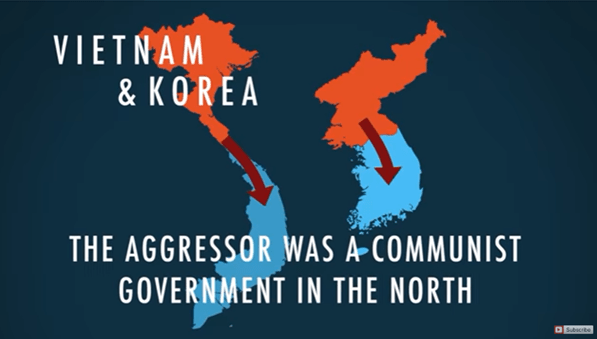
One name I will introduce is the Hungarian Philosopher György Lukács and his influence on the culture of Marxism. It is within this cultural framework, that influences the counterculture of the 1960s. In his 1923 book History and Class Consciousness: Studies in Marxist Dialectics, Lukács focuses on the themes of alienation and reification as historical truths on the advancement of culture. In short, alienation is the Marxist concept of humans being detached from their human nature via labor and social class. Reification is the concept that humans create and trade society, but also live in society, and is a constant dialectical trade. Essentially, one can say that reification is the process of the ‘human being’ becoming the ‘product being’ and governing themselves based on the product. Therefore, students were taught that society sees them as things in a cog of a larger system – a lack of individuality that made them lash out in protest. Honestly, who wouldn’t if you felt taken advantage of – the question is, was it even true? I could debate someone on this, and I would listen as someone could make a good case for reification in the 60s and the 70s, but it is complicated. Much like someone can make the case for reification today, but that too is complicated. One area of social unrest surrounded the Vietnam War and the American involvement in the war. Perhaps it was the policy of the draft that caused young individuals to feel like they have no autonomy to choose if they go to war or not, this I agree with wholeheartedly. But another thread is presented, such as asking why the Vietnam War was fought? It is interesting that when I comment about two different wars: The Vietnam War and the Korean War, I get two vastly different reactions to them; although, both were essentially the same plan, to stop communist aggression – which was very real at the time, and seen as positive in Korea, but unfavorable in Vietnam.
To say that Marxism is a new phenomenon in university is incorrect as it has been a staple for quite some time. So much so that schools began to embrace Maoism stemming from Nixon’s visit to China and the growth of trade and culture between the two countries – leading to Confucius Institutes and even deeper bonds between the university and Marxism. This also saw the growth of international organizations, and their ties with a new economic/social power in China, adopt certain policy levers to be applied on a global scale. One can use the collectivization objective of the United Nations and their Sustainable Development Goals (UNSDG).
All of these factors combine with Lukács’ theory of culture and how it can be shaped solely on the influence of alienation and reification. We can see this with the movements in art, music, and movies that depict this – all of those mediums have known nothing else besides a cultural Marxist understanding. This brings us to today and our students in university. The Gretchen Ideology is that of the Lukács theory of society, understanding your alienation and reification to gain control back of the society using malevolent objectives; although, as a Marxist you don’t see it as malevolent, you mask it through a change narrative of fostering a new and fresh world. The faux niceness is their Motte and Bailey tactic to create drastic change in their world, but when confronted they change their attitude.
“It is not genital mutilation, it is having kids become the people they want to be, and to be happy”
“It is not racism, it is fixing the problems in society and to change the errors of the past”
“It is not that I am secretly owning you through money Walt, it is because you need to get the treatment to cure your cancer”
How Is This Ideology Persisting?
Enough of the history lesson, this ideology is here now, and we have to wonder with all of the negativity around it – how is it still persisting? Much of this question we will get to when asking who is allowing this ideology to remain; but for now, we have to look at the current dynamics in universities to get a deeper understanding.
First, students are stifled to pursue ideas, possibly because of how infantilized they have become over the past ten to fifteen years. I always see videos of activists shouting down a speaker, and I wonder, the students that are quiet are obviously there to see the speaker and don’t agree with the activists or they would join in the shouting, so why are they quiet? Perhaps it is as simple as a mammalian survival instinct to blend, rather than to draw attention to yourself. It is in this precedent that students are afraid to pursue ideas in the act of self-preservation. Also, it does not help when ideological professors dangle internships, research assistant jobs, and even grades over their head lest they follow the line.
Second, professors are either intimidated or indoctrinated to pursue the Gretchen Ideology as a way to survive, or they could truly believe it. The slew of administrative regulations one must do to get research done is tedious, to say the least – and even if you do receive the go-ahead to do research, ideological or intimidated faculty stop any fresh ideas outside of the ideology to be published in peer-reviewed academic journals. The bureaucratic mess stemming from the Gretchen Ideology is making good professors leave, or they are being let go as they are not playing the correct role.
Third, administrators are both weak-minded and largely unintelligent – given a mix of indoctrination and a business model solely based on students being a customer, rather than a student. The most important metric to any administrator is retention. How do you get the student in? How do you keep the student in? And how does that student lead to more students? It is a continuous cycle as the college administrator is rendered to a used car salesman. One only needs to look at the growth of international students coming into Canadian schools, who are wholly unprepared for a Canadian education, end up flunking out but still paying the tuition. It is the inflated tuition dollars and the retention metrics that push international students to stay at the behest of the teachers, the international students themselves, and the institution as a whole.
Who Is Allowing This Ideology to Remain?
I think it is simple to identify who is keeping the lights on for this belief. We have government who are levying votes for this ideology – they implement policy that is generous to these dogmatic principles. You have corporations who are attempting to tap into a new market of consumers – see Environmental Social Governance (ESG) and their 40 trillion asset cap – in order to appease toward a concept of social justice sustainability. You also have NGOs influencing governments and corporations to follow this ideology at a high rate. I think some bigger questions to ask are: why are governments, corporations, and NGOs allowing this ideology to remain? Also, do they see the negative impact it has on students – who become future employers?
To answer the first question, I think we have to accept the fact that in a globalized world, one such since the League of Nations, the divide between governments, corporations, and NGOs is a misconception, as these entities are closer than one thinks. They all embrace a form of cosmopolitanism stemming from internationalist ideas from the late 19th to early 20th century. Have it been a push for eugenics (Julian Huxley and the origins of the United Nations) which led to international reform in attempting to stop climate change; or the growth of international laws governing poorer nations to allow larger countries access to resources – it presents a concept of “do-something-ism” of effete individuals to change the world.
If there is one concept that is emphatically close to the Gretchen Ideology, it is do-something-ism. Do-something-ism, in short, is the belief that there is always a policy, procedure, or action that needs to take place in order to make something better than the previous, and that it is continuous. In other words, a continuing justification for bureaucracy. Phrases like “if it isn’t broke, don’t fix it” are out of the lexicon of do-something-izers because there is always something broke and they are the only ones smart enough to fix it. There is also a psychopathological trait with do-something-izers as they feel their life – or even greater, their generation – is THE lifetime or generation of change and progress, in a push for compassion over the perceived degradation of the world. They are the champions of rights, morality, and the progression of the human race. The faux concept of the Gretchen is mirrored in the do-something-izers to enhance their savior complex with an insatiable appetite for control in any situation.
What does this have to do with students? Well, schools influence and are influenced by the policies and procedures coming from the government, corporations, and NGOs. Of course, this ideology was not held to the obscure halls of academia as many said a mere ten years ago – because graduates were already influencing these areas long before we got wind of it. As a graduate, you essentially have two career paths: the public sector (universities, government), or the private sector (companies, for-profit organizations). Any graduate coming out of university is entering the world of Gretchenized do-something-ism, so why would the policies of universities (influencing and influenced by) produce outcomes that are anything different?
How Do We Get Back to Ideas?
Again, as we have already worked out, ideas are different from ideology. So, how do we get back to ideas in the university? We need to start combining the methods of using the old institutions as a conduit to bring in new ideas, and dare I say, force the issue with new ideas. I have outlined three areas:
- Use the internet to your advantage: The internet is free and there is a lot of information out there accessible to the general public. Now more than ever, heterodox voices are consistently gaining traction, much to the dismay of governments who are really pushing censorship laws on the internet. Use this to your advantage – talk, read, write, and listen to the ideas being presented, even outlandish ones to gauge your own conception.
- Grassroots Campaigning: If there is one thing the left got right back in the day, it is the ability to do grassroots campaigning with like-minded people. Not only just the campaigning, but using that campaign to engage in respectful dialogue through Aristotelian forms of persuasion with Ethics (Ethos), Passion (Pathos), and Logic (Logos). Finding like-minded people to engage with other like-minded and different-minded people is the best course of action.
- Universities Must Have a Purpose: I have developed many friendships/acquaintances over the past three years, in-person and online. Some of which will one day be in positions of power in public and private institutions. I ask that you put pressure on universities to have a purpose for the enhancement of ideas. Have it been through alumni funding, policy change, or the ballot box – make yourself known.
Final Salvo on The Universities Series
It is very easy to hate the institution right now, and the best would be to escape from it. I cannot though, because after studying and looking back on the history of the academic institution – I love it and I hate to see it diminished. I would be way more inclined to fight for it and attempt to save it, rather than let it go. I would not have written this entire three-part series if I didn’t think so.
A little story from my teaching endeavors, I taught an autistic man who was really struggling with some of the basic areas of the curriculum, but by God, he was intuitive and great at understanding applied technical skills. So, I would spend time with him and provide guidance, while respecting him as an adult. I would critique areas he needed to be critiqued in while praising the areas he did well in, all while taking just a little bit of time to meet his needs with a learning disability. I saw him recently and he gave me a big hug and said that he is excited to graduate as he passed his final exam. I cannot even put into words how much joy this gives me. I could have passed him off to an academic specialist or sent him through the diabolical course of bureaucratic mess just to get him a 2-hour session with no real impact. But I didn’t because I would be damned if some paper-pusher treats someone who is misunderstood with actual talent like some cog in a bureaucratic wheel.
In finality, I want to see the institution be saved from whatever this is because it is worth saving, and maybe I will fail in the end, but if given the chance, I’ll not let it go by the wayside. If these Gretchen Ideologues have a problem with that, you have my name and my location, and you know where to find me – because these young minds are worth it, the institution is worth it, and our future is worth it.

 carsonbabich.com