
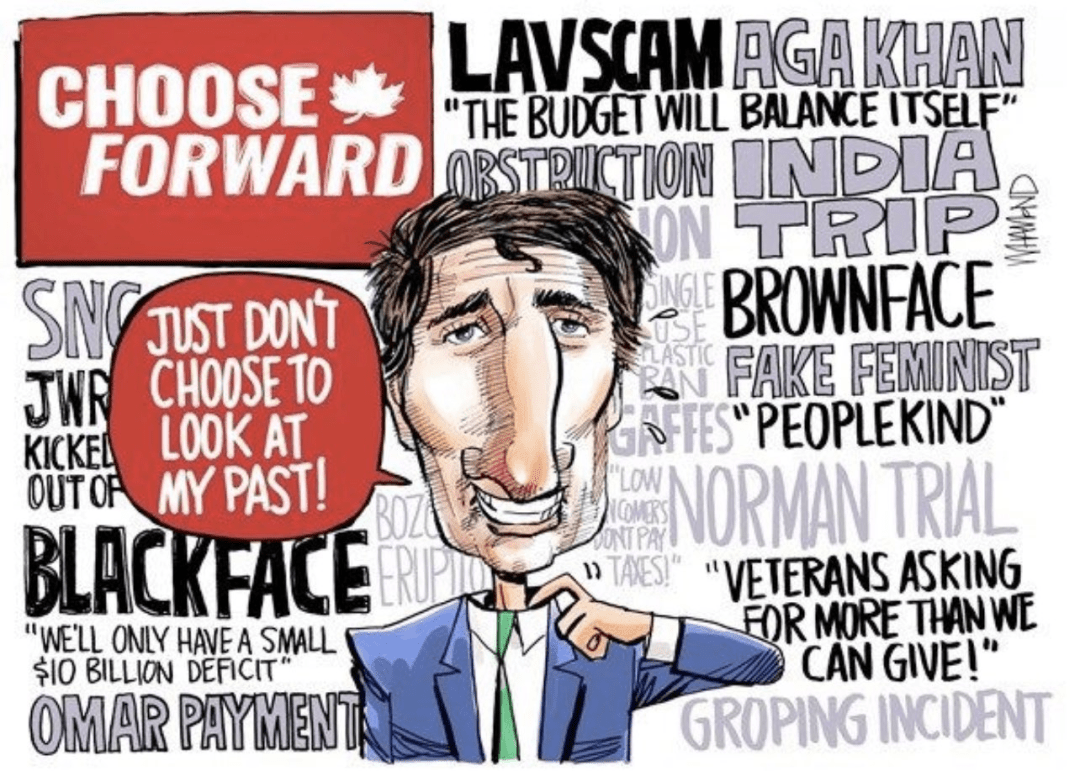
In 1850, a convention held in the north Toronto suburb of Markham saw the induction of reforms for a new movement in Canada. Led by British-Canadian Journalist George Brown, the Clear Grit movement pushed for platforms such as universal vote casting, citizen rights, the right to peacefully discuss, debate, and challenge the government and the constitution, and the Canadian federalist system making way for three levels of government: Federal, Provincial, and Municipal. Many suggest the similarities between the Grit reforms and the words of Thomas Jefferson and the ideals of Jeffersonianism — aligned with the classical tenets of Lockean Liberalism. Fast forward 170 or so years, we experience the Grits becoming the Liberal Party, to becoming lackeys following the confusing — almost quixotic — words of their leader Justin Trudeau. A prime example is when recently Justin Trudeau was met with indigenous protests in Kamloops, B.C., the white commenters disparaging indigenous protests is what I call peak #TruAnon.



Of course, one should always take a handle like Mr. Nice Guy 420 with a grain of salt, but if one looks at Twitter comments and general supporters of Trudeau, one sees similar attributes. Drinks, masks, Ukraine, LGBTQIA+, are all significant signs of ‘current thing-ism‘ which is an attribution given to boomer women, and some men who support whatever current thing is being presented through communication channels such as CNN, MSNBC, The View, or wine mom Twitter.
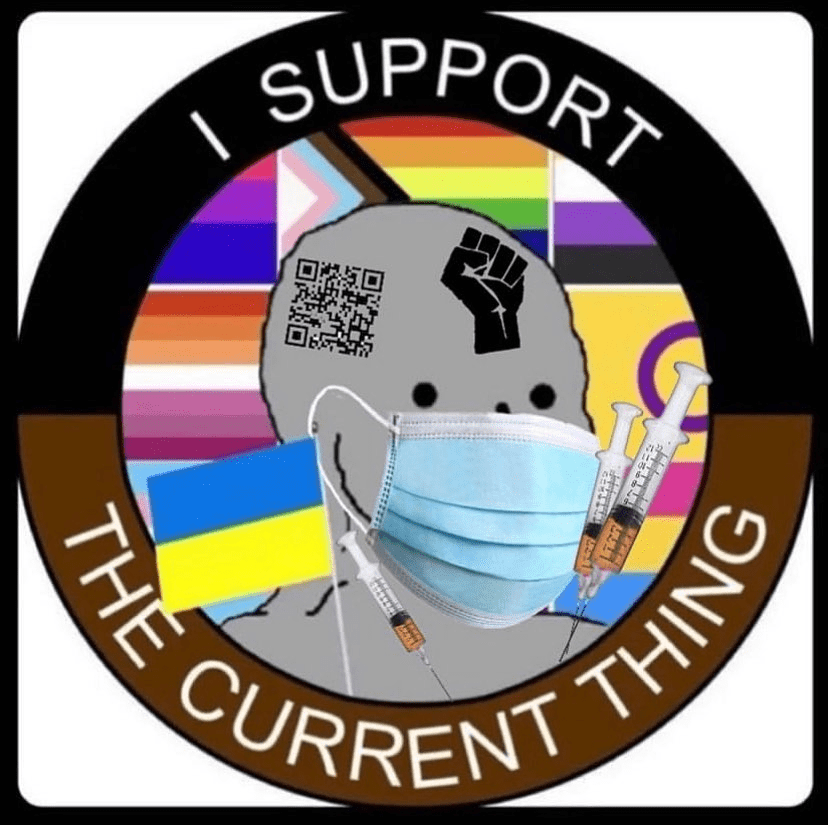
Although dominant in the United States, this type is extremely dominant in Canada. One thing it provides is a great display of hypocrisy and delusion on national and global affairs. Much like how medical experts become civil rights experts, only to go back to medical experts to then become geopolitical experts, moving on to energy policy experts.
What does this have to do with the downfall of the Liberal Party. It is simple that at one time the Liberal Party was not this, but became this over time, almost like it was inevitable. How does the Liberal Party form with the mind of freedom, enlightenment values, and Jefferson Democracy frameworks, to championing the middle class against unfettered corporatization of institutions, to what they are now — cosmopolitan elites, interventionist neocons, globalization neoliberals, and cult followers.
The first question you might ask: Are my words hyperbolic? Perhaps, my question to that would be if I ran #TruAnon through a cult behavior framework developed by scientists, what would I find? More on that later. As stated the Clear Grits were the original iteration of the Liberal Party which ran as a reform to the conservative politics of the 19th century, which largely held the beliefs of empire loyalists (loyal to the Queen of the United Kingdom) and the protestant fraternal order. Considering Grits were Lockeans, they held the belief of freedom against any and all tyranny — especially tyrannical rule from unelected British Royal Family members, and protestant zealots. After all, it is Lockean Liberalism that heavily influenced Thomas Jefferson during his writing of the United States Constitution, the significant objective of the constitution was to reject the tyrannical control of European religious and monarchical systems, and to start their own system of democracy based on Ancient Greek and Roman Republic traditions.
This would be considered conservatism in today’s climate, given some parties have taken it upon themselves to change the Overton Window in the political arena. It wasn’t until the post-Pearson era that the shift changed from a Clear Grit stance to a Laurentian Elite stance. Some may argue it was Lester B. Pearson who started the elitist trend, but it mainly rests on his successor as Prime Minister: Pierre Elliott Trudeau.
What exactly is a Laurentian Elite? John Ibbitson in his 2012 article found in the Literary Review of Canada describes the Laurentian Elite, additionally termed the Laurentian Consensus as a group of political individuals who directs the national policy:
“determined by the political, academic, cultural, media and business elites in Toronto, Ottawa, Montreal and other cities along the St. Lawrence River or its watershed. On all of the great issues of the day, this Laurentian elite debated among themselves, reached a consensus and implemented that consensus. In short, they governed the country.”
This is similar to the cultural elite of the United States commonly located in the Northeast being Democrat voters, living in cities such as New York, Boston, and Washington D.C., attending Ivy League Schools, and ownership of mainstream media such as NBC, ABC, and CBS. The Laurentian Elite are the wealthy and upper-class members of Canada associated with the Liberal Elite which is a common pejorative term describing the upper-class members of society who are out of touch with the middle/working class members of the country they live in but claim moral superiority.
This moral superiority has morphed into the #TruAnon follower. These are individuals who don’t engage in criticism of Justin Trudeau, they viciously attack any slight criticism as some form of violence, anger, and ‘right-wing rage’. Avoiding criticism is one thing, all political followers of one party or another will turn away from insubstantial criticism to gain political points, but none are as vociferous as defending — not only the political — but the personal attributions of Justin Trudeau. It is strange because Trudeau plays the role of a Canadian figurehead with a cult of personality, rather than an elected leader.
I said I would get to how this cult of personality action relates through a cult behavior framework. I found a site run by therapists and mental health professionals trained in cults to get a sense of some characteristics that are found within cults. In this list, a few things immediately stood out to me:
The group is focused on a living leader to whom members seem to display excessively zealous, unquestioning commitment.
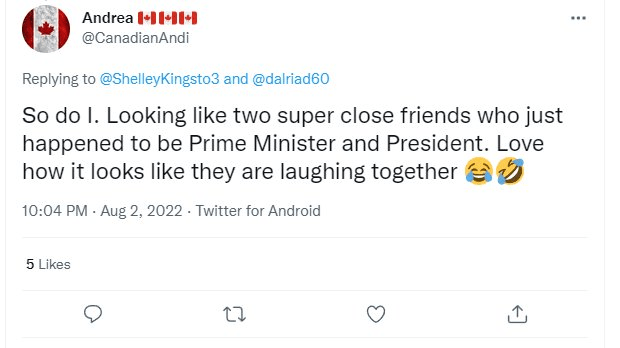
Questioning, doubt, and dissent are discouraged or even punished.
The group is elitist, claiming a special, exalted status for itself, its leader(s), and members (for example: the leader is considered the Messiah or an avatar; the group and/or the leader has a special mission to save humanity).
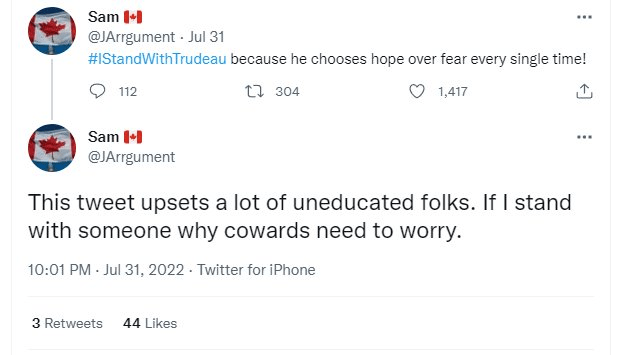
The group has a polarized us-versus-them mentality, which causes conflict with the wider society.
The leadership induces guilt feelings in members in order to control them.
Amongst many more on that list that strikes a resemblance to what we see with #TruAnon. In sum, it would be nice to see the Liberal Party return to its old roots and its old traditions standing up for freedom of all kinds and the rejection of tyranny. After all, of what use is the member following a cult of personality — if the strict rules and control are not enforced. In this politically charged environment, I do believe we are far away from a rational Liberal Party, If you are one of these non-cult Liberals who want to see a return to a Grit platform — your alternatives are Conservative, or disenfranchised voter who stays home on election day.

 carsonbabich.com