
NOTE: If you would like to leave a comment click on the title (i.e. Reflecting on the State of the European Institution at the Turn of the 17th Century). This will enter the specific blog post with an option to leave a comment at the bottom. If you would like, leave a comment to foster some discussion.
In The Advancement of Learning (c. 1605), Francis Bacon observes the university setting at the beginning of his second book and message to King James VI (Scotland) and I (England and Ireland).
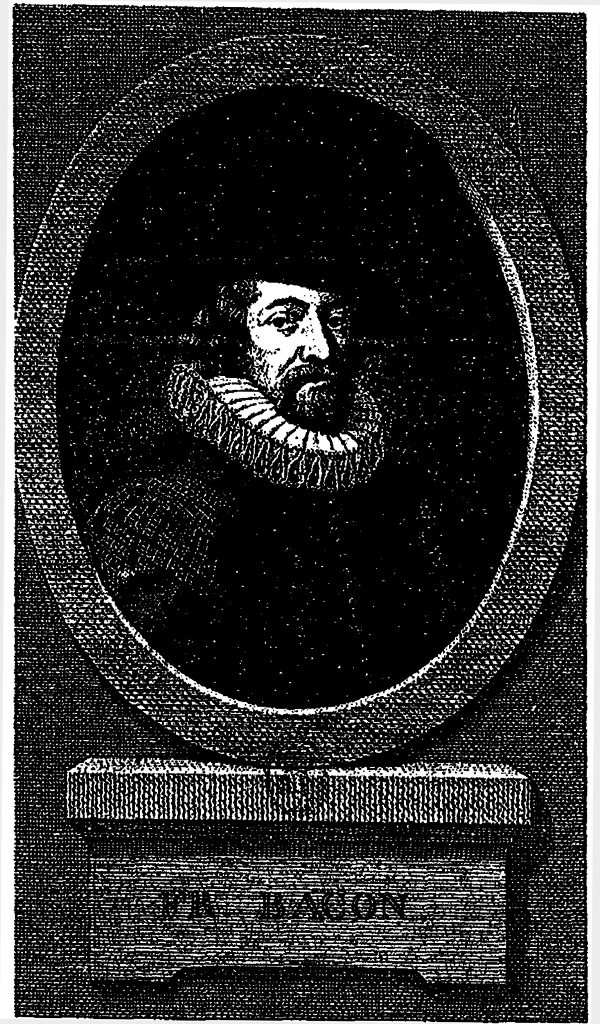
Image from: https://commons.wikimedia.org/wiki/File:Portrait-Francis-Bacon.jpg
For if men judge that learning should be referred to action, they judge well; but in this they fall into the error described in the ancient fable (Speech of Menenius Agrippa), in which the other parts of the body did suppose the stomach had been idle, because it neither performed the office of motion, as the limbs do, nor of sense, as the head doth; but yet notwithstanding it is the stomach that digesteth and distributeth to all the rest. So if any man think philosophy and universality to be idle studies, he doth not consider that all professions are from thence served and supplied.
Francis Bacon – The Advancement of Learning, 1605 Book II, p. 63
Making sense of Bacon’s words, he points to the universities in Europe guided towards profession in rejection of arts and philosophy, but it was arts and philosophy that distributed knowledge in the first place to create the professions. Bacon proposes an re-induction of many philosophies that lead to greater knowledge of a profession, in the way a true politician may need to be interdisciplinary in the natural sciences, pedagogy, rhetoric and the such.
Another defect I note, wherein I shall need some alchemist to help me, who call upon men to sell their books… books be not only the instrumentals… For we see spheres, globes, astrolabes, maps, and the like, have been provided as appurtenances to astronomy and cosmography, as well as books.
Francis Bacon – The Advancement of Learning, 1605, Book II p 64-65

Bacon inducts the notion of an experiential level of learning or a ‘learning by doing’. Sure the use of maps and astronomy charts are useful, but not more or less useful that observing the night sky. Which today, advanced telescopic imagery is paramount to the success of cosmology and astronomy.
And if Alexander made such a liberal assignation to Aristotle of treasure for the allowance of hunters, fowlers, fishers, and the like, that he might compile a history of nature, much better do they deserve it that travail in arts of nature.
Francis Bacon – The Advancement of Learning, 1605, Book II, p. 65
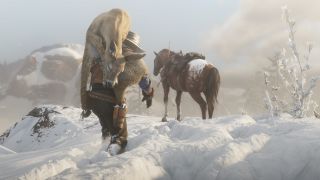
This reminded me of the recent blockbuster video game title Red Dead Redemption 2 (Rockstar Games, 2018), where you, as the main character Arthur Morgan can head out to hunt and observe animals, once you have hunted or observed an animal, that animal is added to what is called in-game as a ‘zoological compendium’. The only way to achieve animals in your compendium is to go out as the character and observe the animals in their natural habitat. A field experience outside of a text.
I take it those things are to be held possible which may be done by some person, though not by every one; and which may be done by many, though not by any one; and which may be done in the succession of ages, though not within the hourglass of one man’s life; and which may be done by public designation, though not by private endeavour.
Francis Bacon – The Advancement of Learning, 1605, Book II, p. 68
The extending of lifelong learning towards mastery of one or many subjects in ways cannot be obtained in one personal life, it must built throughout the generations. Astronomy for example, when there is a Neil DeGrasse Tyson, it is built on the works of a Stephen Hawking, Carl Sagan, Albert Einstein, Edwin Hubble, Isaac Newton, Galileo Galilei, Nicolaus Copernicus, and Aristarchus of Samos. Learning all is not to be achieved, rather cultivated and passed on to be further cultivated in future generations (my apologies to anyone who thought they learned everything!).
In summary, the notion of multiple learning streams, experience and lifelong learning are all areas in which we can relate. From waking up every morning, one day older than the last we learn more about our world, our relationships, and ultimately ourselves. This comes from our personal and collective experiences in the many areas of school, work, relationships (online and offline), culture, and society to help shape our knowledge. Perhaps what I can reflect from the university model from the 1600’s to today’s model is to continue to embrace dynamic forms of learning, move outside of the textbook, even outside of the classroom to gain further knowledge, producing an inspiration in further learning and continued mastery.
References
Bacon, F. (1863). The advancement of learning (Thomas Markby, M.A., Trans.) London, U.K.: Parker, Son, and Bourn. (Original Publication, 1605).
Rockstar Games. (2018). Red Dead Redemption 2 [Playstation 4]. New York, NY: Take-Two Interactive

 carsonbabich.com

